Stefan Stojkov: We believe in the development of a modern Serbia and want to contribute to its progress while preserving our heritage
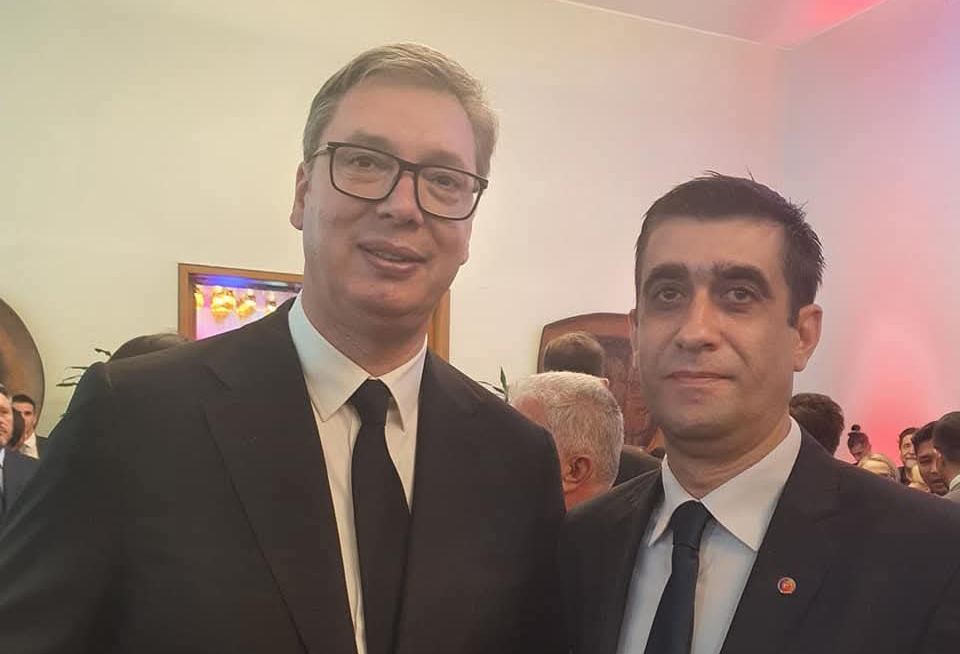
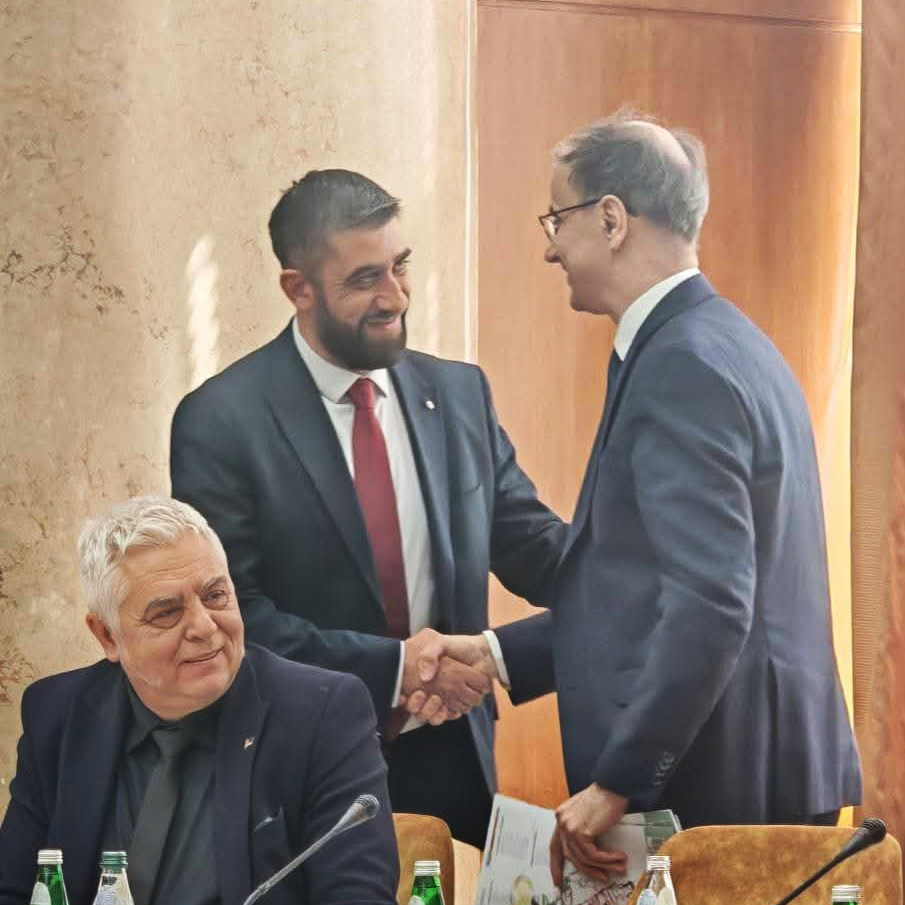
Aleksandar Vučić, President of the Republic of Serbia, and Stefan Stojkov, President of the National Council of the Bulgarian National Minority in Serbia
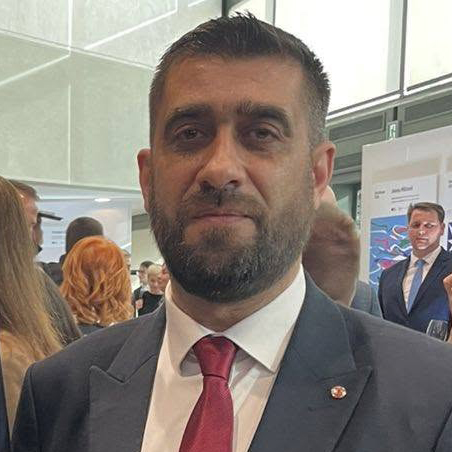
Interviewee: Stefan Stojkov, President of the National Council of the Bulgarian National Minority in Serbia
Context: The priorities and results of the work of the National Council of the Bulgarian National Minority in Serbia, improvements in education and access to information in the mother tongue, and the launch of the children’s magazine “Детски мечти”. We speak with Stefan Stojkov about preserving the Bulgarian language, culture and identity, the position and rights of the Bulgarian community, and its role in strengthening friendship and cooperation between Serbia and Bulgaria. We pay particular attention to the future of young people, employment opportunities and the importance of developing southern Serbia so that members of this community can stay and live with dignity in their local communities.
What are the National Council’s most important priorities today, and what do you consider its greatest achievement?
Stefan Stojkov: Bulgarians in Serbia today live primarily in the south and southeast of the country, in Bosilegrad and Dimitrovgrad, but also in other communities throughout Serbia. Wherever we live, we strive to be good, honest and loyal citizens of Serbia. We respect our origins, but we also deeply respect the country in which we live.
During its current term, our National Council has clear priorities: improving relations between Serbia and Bulgaria, strengthening education in the mother tongue at all levels, improving and ensuring a stable provision of information in Bulgarian, ensuring the consistent official use of the language and script, and preserving and developing cultural creativity and traditions. It is particularly important to us that young people have the opportunity to learn and use their mother tongue and become familiar with their culture.
I would like to take this opportunity to thank the Government of the Republic of Serbia and the Ministry of Education for ensuring that, after several decades, all primary and secondary school textbooks have been translated. This is a major step forward for our children and our future, and one of the achievements I consider particularly significant.
It is also important that we now have media outlets in Bulgarian. The National Council is the founder of three media outlets: the broadcaster NRTV Bosilegrad, the fortnightly print publication “Ново Братство” and the children’s magazine “Детски мечти”. Our community’s cultural life continues to develop, and in January 2026, we also adopted the National Council’s Strategy for the period from 2026 to 2031, with the assistance of the OSCE Mission to Serbia.
We are also working to increase the employment of members of our community in the security sector, in the police, border police, fire and rescue units, and the military. In cooperation with the Ministry of the Interior of the Republic of Serbia, we have already taken significant positive steps. In the last two recruitment rounds, 14 young members of our community were accepted, for which we are sincerely grateful to the Ministry of the Interior and the Serbian state.
According to the 2022 census, the number of members of our community has declined. However, I am convinced that the actual number is higher and that some people still do not freely declare their ethnic affiliation, partly, I believe, because they are insufficiently informed.
I want to state clearly that the Republic of Serbia is a democratic country and that the Bulgarian community enjoys all basic rights: the right to education, information, culture, language and script, as well as the right to live and work with dignity. I believe that few countries, not only in Europe but also in the world, offer minority rights comparable to those that exist in Serbia today.
That is why I believe that attempts to present a different picture in international circles are not good for either our community or Serbia’s relations with its neighbours. We are ready, together with the Government of the Republic of Serbia, to demonstrate the true situation through facts and results. It is precisely because of these achievements, as well as the good-neighbourly policy the Government has pursued for more than ten years, that Serbian citizens of Bulgarian origin today feel safer, freer and more respected.
Why did you launch the children’s magazine “Детски мечти”, and what do you hope to achieve through it?
Stefan Stojkov: We launched “Детски мечти” in late 2025, after more than ten years during which the children of our community had no print publication of their own in their native Bulgarian language. Our idea is for the magazine to encourage younger generations to preserve and respect their language, culture, traditions and customs in an accessible and appealing way, while also developing a love of books, art and creativity, as well as a culture of reading.
The magazine is published four times a year, with a circulation of 1,200 copies. It is distributed free of charge to children in kindergartens and primary schools in Bosilegrad, Dimitrovgrad, the villages of Božica and Klisura in the municipality of Surdulica, the village of Zvonci in the municipality of Babušnica, and the village of Ivanovo within the territory of the City of Pančevo.
Our goal is not only for children to read in Bulgarian, but also to use it actively. That is why the children themselves help create the magazine through their stories, poems and drawings, alongside subject teachers, primary school teachers and preschool educators. In this way, “Детски мечти” connects language, education and creativity, helping new generations experience their cultural identity as something alive, contemporary and their own.
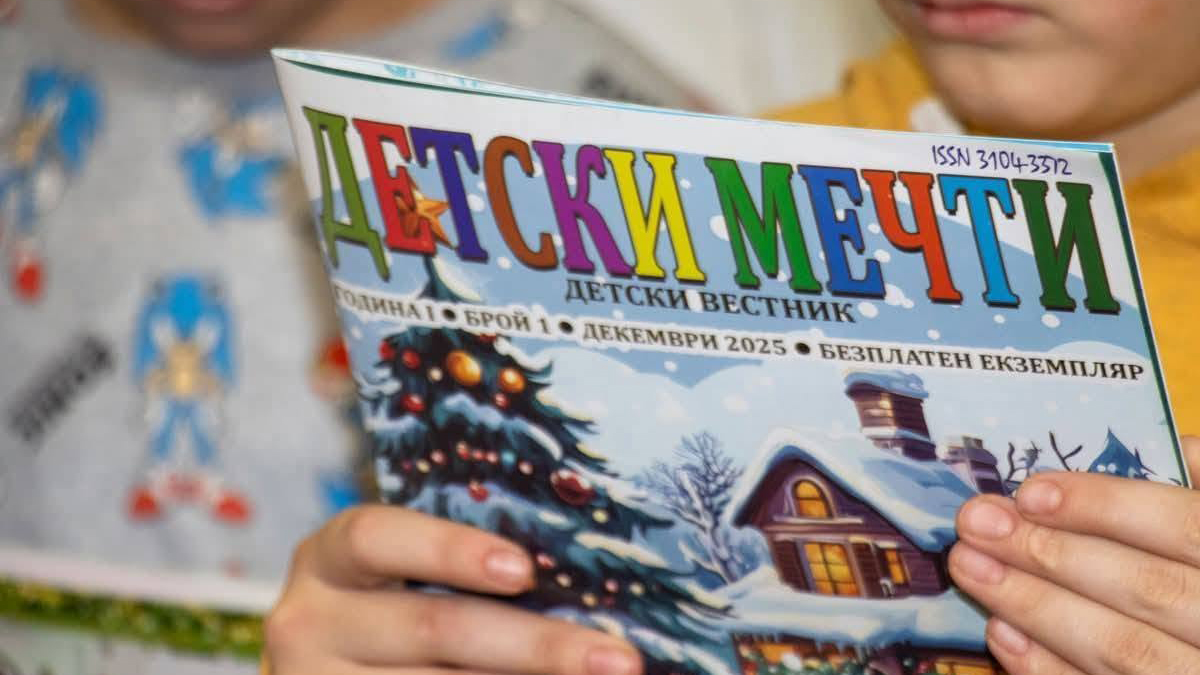
The children’s reactions show that our mission is succeeding. They are happy, pleased with the magazine and preparing new ideas for each upcoming issue. I sincerely hope that this children’s publication will contribute to preserving the language, cultural identity and spirituality of the Bulgarian community in Serbia.
We owe a great debt of gratitude to the team that prepares the magazine, as well as to the Government of the Republic of Serbia, which allocated funds for its publication.
Can the Bulgarian community in Serbia be a bridge between Serbia and Bulgaria?
Stefan Stojkov: The Bulgarian national community in Serbia certainly can be, and already is, a key bridge of friendship and cooperation between Serbia and Bulgaria. This role is also emphasised by the highest state officials of both countries, who stress that minorities should be a link connecting the two peoples.
We know both societies, speak both languages and have natural cultural, family and historical ties that can contribute to mutual understanding. This potential should not be viewed solely through culture and the preservation of traditions. There is considerable scope for cooperation in education, the economy, tourism, infrastructure and local development, as well as for connecting institutions, media outlets and people on both sides of the border.
Members of our community help bring the two countries closer together through cultural exchange, the preservation of traditions, cross-border economic and infrastructure projects, and media cooperation. Every successful joint project contributes both to our community and to strengthening good-neighbourly relations between Serbia and Bulgaria.
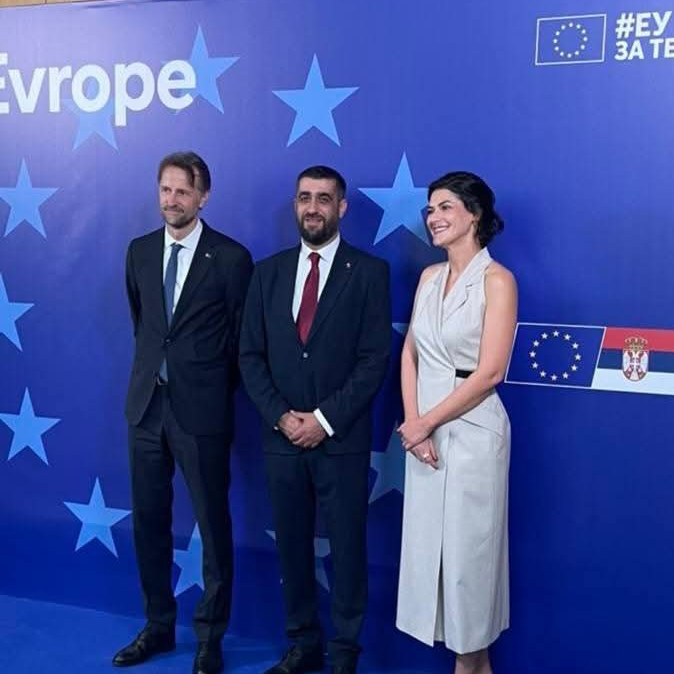
Serbia’s European path is also important. The position and rights of national minorities are a significant issue in the European integration process. Bulgaria supports Serbia on this path, and the stable position of the Bulgarian community provides a foundation for further strengthening the political partnership between the two countries. Although challenges and different views on historical topics and terminology occasionally arise, everyday life, shared economic interests and cultural closeness demonstrate that the Bulgarian community plays an irreplaceable role in building stable and friendly relations between Belgrade and Sofia.
What kind of Bulgarian community would you like to see in Serbia in ten years?
Stefan Stojkov: Our vision is to be guardians of our heritage, but also drivers of development and progress in the 21st century. In ten years, I would like us to have a community that has preserved its language, culture and identity, while also being modern, open and forward-looking, recognised as an active, equal and constructive part of society that enriches Serbia’s multicultural mosaic.
We want to build a future together in which every member of our community can freely express their identity, as they have done so far, contribute to society and live with dignity, as part of a united, European and multiethnic Serbia. We can achieve this vision only through joint efforts.
What matters most is that young people have a reason to stay, pursue an education, work, start families and see prospects in the communities they come from. That is why preserving identity must also be accompanied by the creation of better conditions for education, employment, entrepreneurship and the development of local communities.
Since a large part of our community lives in southern Serbia, I would like to express my sincere gratitude and full support following the announcement by the President of the Republic of Serbia, Aleksandar Vučić, that the next Government will draw up a concrete plan for the development of southern Serbia. The announcement of systematic and planned investment has given great hope to the residents of that part of the country, including us.
Over the past ten years and more, Serbia has invested heavily in the south of the country, in healthcare, education, digitalisation, road infrastructure, the rule of law and other areas of vital importance. Nevertheless, southern Serbia is losing its population. People are leaving, and we are losing young people and skilled professionals.
That is why we urgently need a clear and concrete state plan, such as the one President Vučić announced. People need to stay and work, and southern Serbia needs to become an attractive place for a dignified family and professional life. I personally believe, and am optimistic, that President Vučić will have the strength and energy to put this development plan into action in the coming years.
Our goal should be to ensure that young people do not have to choose between their identity and their future, but can preserve one and build the other right here in Serbia.
Related posts