Marko Franeta: Family Is the Foundation, and Patience the Best Investment
In a time when success is often measured by follower counts and attention spans by the length of a single video clip, there are young people who choose a different yardstick. They don’t try to be louder than everyone else, nor to “build a brand” at any cost. They protect the family name, work quietly but persistently—and that’s why people remember them.
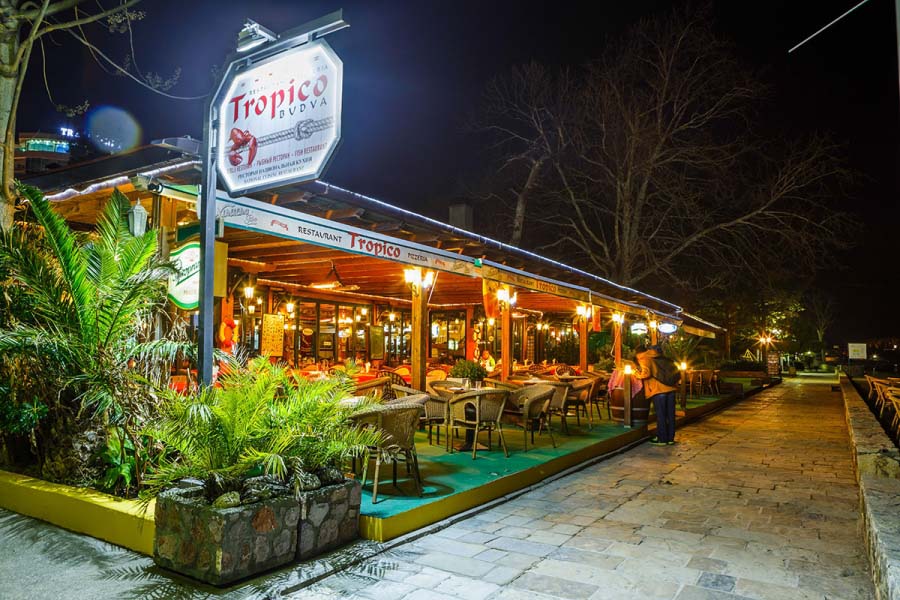
One of them is Marko Franeta, a young man from Budva, educated in Belgrade, who today runs Restaurant and Villa Tropico with his family, well-known landmarks along the Budva coast. Still, this story isn’t “about the restaurant.” This is a portrait of a man who consciously chose to return home and stay among his own, in his hometown, believing that value isn’t built through speed, but through character.
We met Marko in Belgrade, a city he says he always returns to with a special feeling. In a conversation for Serbia Inspires, he speaks about childhood, education, the shift from student life to work “on the ground,” and what he considers most important: family, responsibility, and the patience we see less and less today.
Values from Home: Love and Work as the Same Language
Marko says he grew up in an environment where love was never separated from work. His parents, he explains, taught him early on that nothing should be taken for granted, neither respect nor success, nor even the most basic things.
“My childhood was full of love and work. From a young age we were taught that nothing should be taken for granted,” Marko says. He describes life as simple, but stable, with clear family rules: “We knew what family means, it’s the foundation of everything. Both love and responsibility.”
In that sentence you can hear his baseline: wherever he goes and whatever he does, he starts from the idea that you’re first “educated at home.” And when gratitude and responsibility are learned at home, it’s easier to stay grounded in business too, especially in a business that means constant contact with people.
Belgrade as a Turning Point: A School of Knowledge and Maturity
Asked why he chose Serbia and studies in Belgrade, Marko answers simply: it was a natural choice, both culturally and emotionally. “Belgrade accepted me as one of its own,” he says. He studied at MB University, where, in his words, he gained more than formal knowledge.
“I gained not only knowledge, but a broader understanding of business, responsibility, and how you should treat people. That’s where I matured, both as a person and as someone who would one day lead a business.”
When he talks about Belgrade, he doesn’t speak only about a place to study, but about a period in which a person is shaped: learning to accept the consequences of decisions, to plan, to think long-term. That bond with the city has lasted, he says he always returns to Belgrade with a special feeling, as to a place that “built” him during an important phase of life.
Returning Home and the Family Business: Modernization Without Losing the Soul
Today, Marko is part of a family story that spans more than three decades. But he doesn’t present returning to the family business as “the easy road,” but as an added responsibility.
“People often think that when you return to a family business, everything just falls into place. But precisely because it’s family, you have to be even more responsible,” he says. He especially emphasizes his relationship to the surname: “I don’t carry the family name as a privilege, but as an obligation.”
Marko works with people every day, “right there, on the spot” and that’s where he sees the essence of hospitality: a host isn’t just a role, but an attitude. He says he invested real effort to improve the business and adapt it to the times, but without losing what he considers crucial: identity and atmosphere.
“I put a lot of effort into modernizing the business, but without losing what matters most, it’s soul. The hardest thing is finding the balance between the new and the old, but that’s also the most valuable.”
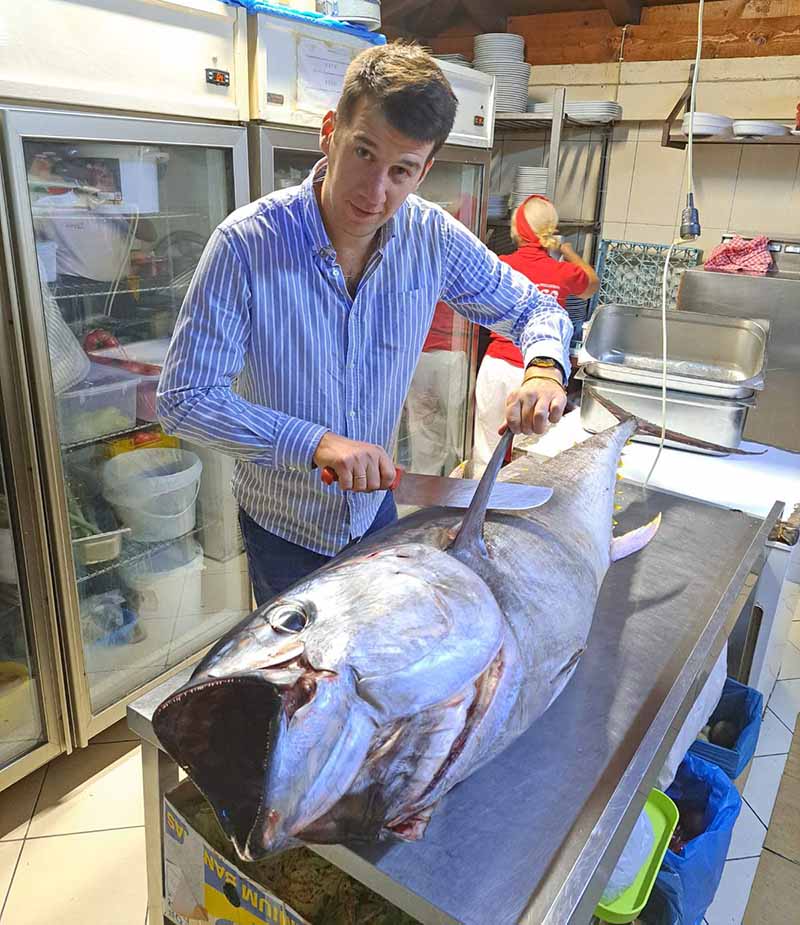
Marko Franeta, a host from Budva, prepares a fresh catch in the kitchen of the family-run Tropico an excerpt from a portrait about patience, work, and family values.
When he speaks about motivation, he doesn’t single out personal ambition, but family: “My wife, my two children. And respect for what my parents built.” And he adds a sentence that sounds like his everyday principle: “It’s not ‘mine’, it’s ‘ours.’ And I work every day as if I’m just starting out.”
At a time when many young people leave, Marko decided to return. He doesn’t frame it as a sacrifice, but as a choice.
“We don’t all have to leave. Someone has to stay, to protect the home, to welcome others, to build.” He wants his children to grow up “in a house with roots,” and believes a person can create value anywhere, as long as they know why they’re doing it.
To young people who want to enter business but lack patience, Marko says they should first work on themselves, avoid shortcuts, and respect people. “Reputation, integrity, the way you treat employees and guests, everything comes back, often when you least expect it,” he says.
His vision is clear and unassuming: for Tropico to remain a place people come to for the taste, and return to for the feeling. “Everything can be modernized, but the heart must never become a machine. Human connection, that’s what sets us apart,” he emphasizes.
And when we ask him what success means to him, Marko doesn’t talk about numbers. He talks about peace.
“Success is when my kids fall asleep peacefully. When my wife says, ‘It’s good that we’re here.’ When my parents see their effort wasn’t in vain. And when a guest looks me in the eye and says, ‘Thank you, it’s nice here.’”
Marko Franeta isn’t a businessman in the stereotypical sense of the word. Above all, he’s a man of character a host who shows that values aren’t old-fashioned, but enduring. In a world of fast results, his story is a reminder that what lasts is built slowly: through family, patience, and respect for people.
Related posts