Interview: Connecting Tradition, Modern Business and the Public Interest
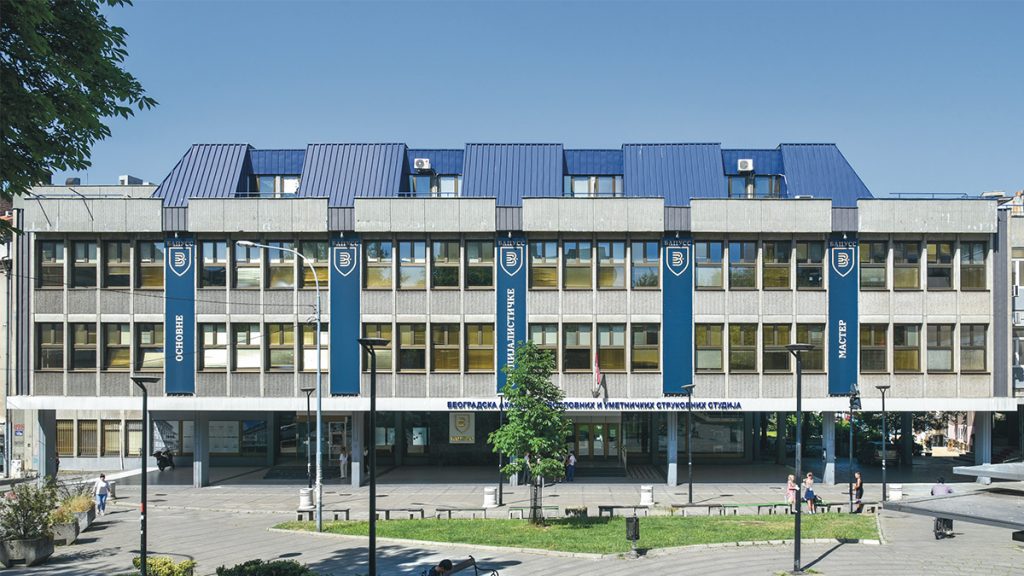
Belgrade Academy of Business and Arts Applied Studies (BAPUSS)

Interviewee: Prof. Dr. Mile Samardžić, Chair of the BAPUSS Employers’ Council
Occasion: Marking the 70th anniversary of the Academy (1956–2026), the intensification of business-institutional cooperation, and the digital transformation of the economy
“Our guest today is Prof. Dr. Mile Samardžić, Chair of the newly established Employers’ Council of the Belgrade Academy of Business and Arts Applied Studies (BAPUSS). With a tradition spanning seven decades, which began back in 1956 with the establishment of the Higher School of Economics and Commerce, BAPUSS is today a modern, leading state higher education institution in the field of applied studies in Serbia. As Chair of the Employers’ Council, Prof. Dr. Samardžić leads key reform processes aimed at firmly connecting the academic community with the business, public and government sectors, ensuring that Academy students acquire applicable knowledge aligned with the modern labour market and contemporary technological trends.”
1. What constitutes the legal and substantive basis for the establishment of the Employers’ Council at the Academy?
Prof. Dr. Mile Samardžić: The BAPUSS Employers’ Council is grounded in the modern legal framework of higher education in the Republic of Serbia, relying primarily on the provisions of the Law on Higher Education and the Law on the Dual Model of Studies in Higher Education. The legal essence of this body lies in the obligation and need for higher education institutions to include external partners, leaders from the business community and the public sector, in the process of evaluating and improving educational programmes. We are not merely a formal body; we are a legal and strategic partner of the Academy, ensuring the transparency and relevance of the diplomas we issue, while following European standards in applied education.

2. What were the main practical reasons and driving factors behind the decision to establish this body?
Prof. Dr. Mile Samardžić: The modern labour market is developing faster than ever before, requiring young business professionals who, immediately upon completing their studies, are able to respond to complex business challenges. Traditional academic models often suffer from a gap between theory and practice. The main reason for establishing this body is to eliminate that gap. We want industry to tell the Academy directly: “These are the technologies, skills and knowledge we will need over the next five years.” In addition, the marking of the institution’s 70th anniversary was an ideal moment to build upon our long tradition with the most modern mechanism of cooperation.
3. How does the Council function in practice? How do you make decisions and implement activities?
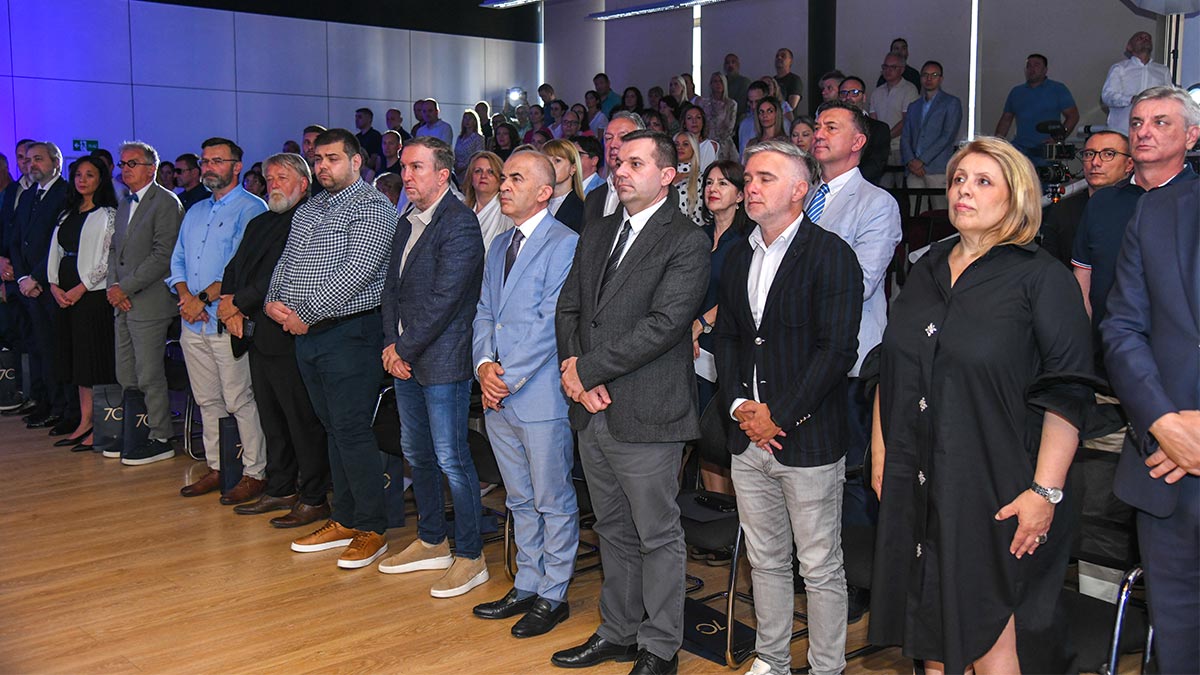
Prof. Dr. Mile Samardžić: We function as an operational and advisory body that brings together eminent experts. In addition to myself, the Council’s core leadership includes Council Secretary Bojana Teofilović, as well as teams responsible for cooperation with the business sector. Our work is organised through regular sessions, field working meetings and expert panels. We analyse curricula through the lens of shortage occupations, create databases and act as an intermediary. Our administrative and technical office has already established direct lines of communication with students and created contact databases precisely divided by fields of study: from IT, through finance, taxation and customs, all the way to management and the arts.
A team-based approach to the functioning of the Council represents the most important factor for high-quality and long-term stable work. In a broader sense, the team consists of the Academy’s management, professors, associates and students, together with our external partners and members of the Council. It is precisely this comprehensive synergy of internal and external stakeholders that forms the basis of our sustainability and effectiveness.

I would particularly like to emphasise that the success of the Council is the result of exceptional teamwork at all levels of the institution. The highest management of the Academy provides the strategic vision and institutional authority without which none of this would be possible. Our professors contribute the academic depth and expertise that give credibility to every partnership we establish. The Academy’s administration, often invisible yet always indispensable, ensures that everything functions precisely and reliably every day. And our students, who are the ultimate reason for everything we do, bring energy, freshness and authentic motivation that drives us all forward.
For all these reasons, I feel deep and sincere gratitude toward every member of this team, toward everyone who invests their energy, attention and time in the work of the Council. That dedication cannot be taken for granted; it is valuable, and it is precisely what makes the difference between an institution that merely exists and an institution that truly changes lives.
4. What exactly do companies and employers gain by entering into partnership with the Council?
Prof. Dr. Mile Samardžić: The benefits for employers are direct and measurable. First, they gain exclusive access to a database of the best students and graduates, which drastically reduces recruitment costs and time. Second, they have a unique opportunity to directly influence the creation and modification of study programmes, in order to adapt future personnel to their needs. In addition, there is also the enhancement of corporate visibility through guest lectures, participation in panels and joint projects with the Academy.
5. Where does the student stand in all of this, and what advantages does the student gain through the work of this body?
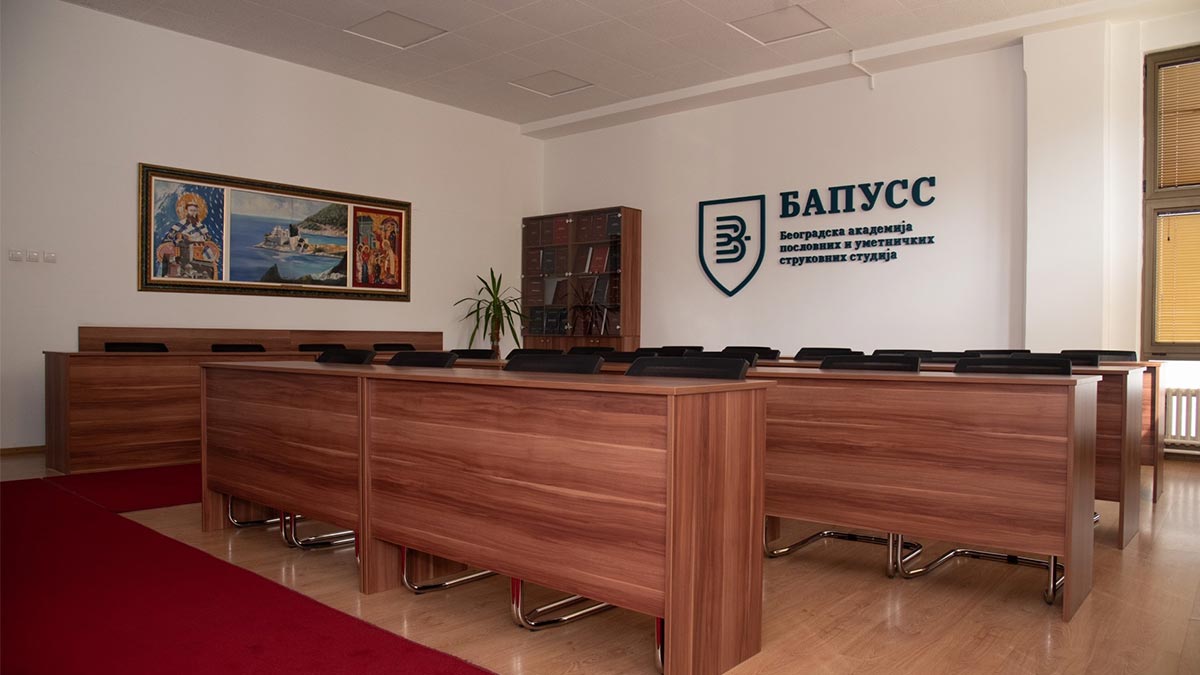
Prof. Dr. Mile Samardžić: The student is at the centre of our activities. Through the work of the Council, we provide students with mandatory, high-quality professional practice in a real working environment, under the supervision of mentors from successful companies. They no longer learn only from books; through guest lectures, they learn directly from directors, managers and government officials. The greatest benefit is increased employability: our students acquire competencies that are immediately marketable on the labour market, and many of them secure employment already during the course of their professional practice..
6. How does the establishment and work of the Council enhance the status of the Academy itself?
Prof. Dr. Mile Samardžić: For the Academy, the Council is a guarantee of modernisation and high institutional reputation. By connecting with the business sector, our study programmes become highly competitive and attractive to new generations of students. We also raise the level of scientific and professional work through joint research and applications for domestic and international projects. In this way, BAPUSS confirms its leading position in the field of applied education in the region.

7. What does the operationalisation of cooperation with the private business sector and companies look like?
Prof. Dr. Mile Samardžić: The business sector responds quickly and dynamically, and our communication follows the same approach. We have created specific models of Letters of Cooperation and partnership agreements tailored to companies. Cooperation takes place on several levels: from organising regular blocks of professional practice and providing scholarships, to implementing mentoring programmes in which business managers monitor students’ work on final projects. Our goal is for the logos of the most successful domestic and foreign companies to become a permanent part of our partner network on the Academy’s website and in its brochures.
8. In addition to the economy, you are also active in the public sector. You recently had an important working meeting with NALED. What steps are you taking in that area?
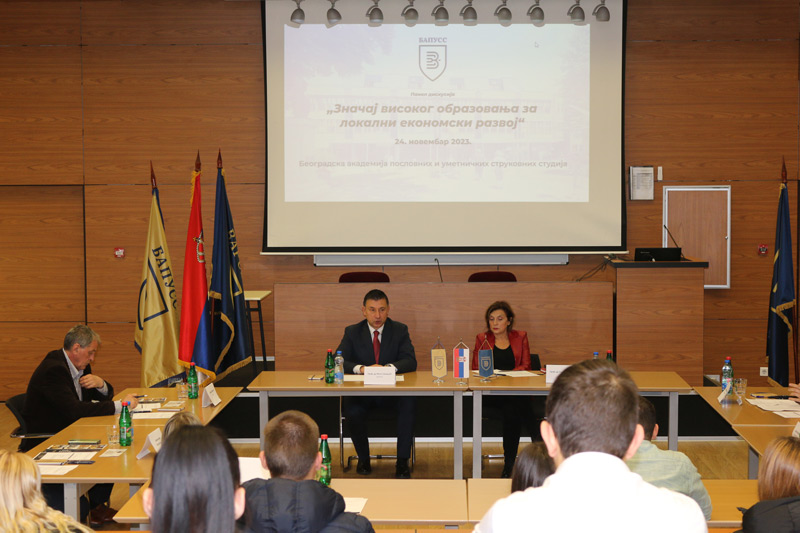
Prof. Dr. Mile Samardžić: That is correct; the public sector and state institutions are an equally important pillar. Our recent working meeting with NALED, the National Alliance for Local Economic Development, during which we were visited by Slađana Stešević, Manager for Cooperation with Scientific Research Organisations, is an example of how we are building these bridges. We discussed models of cooperation in the areas of professional development, public administration and local economic development. We have created special models of cooperation for ministries and state agencies, because the Academy educates profiles that bring efficiency and digitalisation to the public sector: finance, taxation, customs and public administration.

9. When we look at the broader picture, we are witnessing Serbia’s intensive economic development and a record level of domestic and foreign investment. How does the BAPUSS Employers’ Council fit into this macroeconomic dynamic, and what kind of cooperation are you planning with the relevant ministries?
Prof. Dr. Mile Samardžić: This is a key question that defines our long-term mission. The positive role of the state in creating a stable and stimulating investment environment has produced outstanding results: high-tech companies are coming to the country, modern factories are being opened, and the domestic entrepreneurial sector is developing. However, strong economic growth also brings great responsibility, namely the mandatory alignment of the workforce with the new needs of the market. Investors are no longer looking for just any workforce; they are looking for highly dynamic, professional and immediately applicable personnel who are proficient in modern tools and technologies.
The BAPUSS Employers’ Council, as part of a state institution, recognises these market requirements and acts as an operational instrument that directly implements the strategy of human resources development. In this regard, our cooperation with the relevant ministries, primarily the Ministry of Education, the Ministry of Economy, as well as the Ministry of Finance and the Ministry of Labour, Employment, Veteran and Social Affairs, is of essential importance. Through partnership with these ministries, we want to serve as a support mechanism that will guarantee to foreign and domestic investors that they can find highly educated young professionals in Serbia. We support the Government’s economic reforms by ensuring that the education system does not lag behind the economy, but develops in parallel and in synergy with it.
10. We are witnessing an unprecedentedly rapid development of technology in all spheres of business. The need for high-quality digitalisation and the optimal use of artificial intelligence (AI) has become our reality. How does the Employers’ Council plan to respond operationally to these global challenges?
Prof. Dr. Mile Samardžić: We are at the centre of a true technological revolution that leaves no room for waiting. It is the obligation of all of us, and especially of the Employers’ Council at a leading state academy, to respond immediately to these dynamic changes at the global level. Those who fail to keep pace with digital transformation today will no longer exist on the market landscape tomorrow. In the Council, we invest additional energy, attention and time in order to ensure that our study programmes and cooperation with the business sector are permeated by high-quality digitalisation of business processes, regardless of whether we are referring to manufacturing activities or the service sector.
In this context, the optimal use of artificial intelligence (AI) in all areas of business is no longer a topic of the distant future; it is our absolute present and a real necessity. Artificial intelligence is dramatically changing the way we analyse financial reports, optimise supply chains, manage marketing campaigns and handle human resources. For this very reason, I would particularly like to emphasise that one of the most significant and concrete tasks of the Employers’ Council will be to provide direct support in the processes of digitalising our employers’ business operations, as well as introducing the high-quality use of artificial intelligence (AI) into all segments of their operations. We will implement this transition to advanced technologies through joint projects and professional practice involving students and employers, all under the continuous mentorship of the Academy’s professors and the Employers’ Council itself. In practice, our students will enter companies and work together with managers on concrete projects of digital transformation and the implementation of AI tools. Professors will guarantee the quality of these solutions through their scientific and professional authority, while the Employers’ Council will coordinate the entire process. In this way, we are creating a unique synergy: employers receive innovative digital solutions, students gain invaluable practical experience, and the Academy confirms its role as a driving force of technological development in the domestic economy.
11. Where do you see the role of the Employers’ Council at the international level, and to what extent can the Academy’s activities keep pace with global economic trends?
Prof. Dr. Mile Samardžić: Special attention by the Employers’ Council and the Academy’s management will be directed precisely toward international cooperation, imposed by the unstoppable process of business globalisation in general. We live in a time when the overall development of the economy and business is reaching the highest level in our country’s recent history. We are witnessing that, over the past ten years, the general diplomacy of the Republic of Serbia has reached the highest level of quality, while so-called “academic diplomacy” represents one of the key segments of that broader diplomatic network.
Our activities at the international level directly create a stable and reliable foundation for foreign investors. As both future and current employers in Serbia, foreign investors, through partnership with the BAPUSS Employers’ Council, can carry out their HR plans with higher quality, more easily and more quickly, relying on personnel educated according to the highest European standards.
In close cooperation with the state, it is our obligation and professional imperative to keep pace with this trend of accelerated economic development. Raising the overall reputation of Serbia at the international level, through the creation of modern and globally competitive dual education, is our common task and strategic goal.
“Our doors are wide open. We invite all interested employers, organisations and institutions to join us, become partners of the Council, and directly participate in shaping the future of the Serbian economy through the development of young talents educated by BAPUSS.”
Photo Gallery